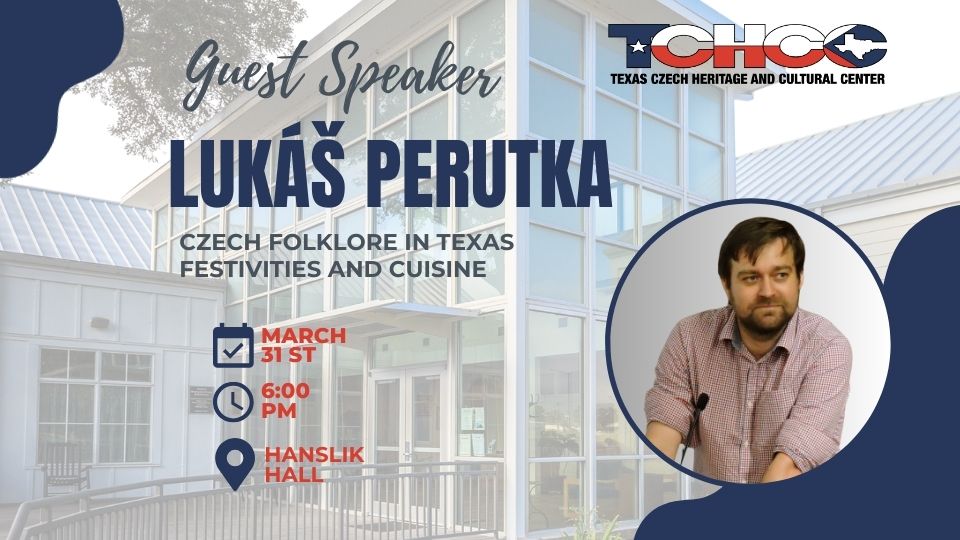
An indivisible part of all migration processes is also the transfer of cultural heritage, which then adapts to the new environment. The same was true of the Czechs (or rather Moravians) in Texas, who sailed across the Atlantic Ocean in larger numbers in the second half of the 19th century. They brought with them a system of religious habits, family customs, and public traditions, as well as a specific cuisine. However, the different reality of the United States of America led to a reassessment of this cultural heritage. Czechs in Texas found themselves in a completely new political (civic), economic, and social situation. Together with interaction with the local population, which was based on different values, this led to the creation of a new, unique system that combined, metaphorically speaking, the old and new worlds and mindsets. This micro historical contribution aims to explain why this process occurred and, at the same time, to trace the transformation of calendar customs, festivities, and the associated dishes of the Czechs in Texas. Materials of both Czech and American provenance will be used. Based on their comparison, we will look for both the cultural heritage of their old homeland and the innovations they adopted in their new home.
Lukáš Perutka is an associate professor at the Palacký University in Olomouc, Czech Republic. He has teaching experience at the Institute of Technology in Monterrey, Mexico, the University of California, Berkeley, and Charles University in Prague. His research interests include triangular relations between the United States, Europe, and Latin America, or migration from Central Europe to the Americas. He published numerous articles and four monographs. Among them Za to spasitelské moře. Emigrace Rožnovanů do Texasu (Across the Messianic See. Immigrants from Roznov district in Texas).